Collaboration restores 1910s details to the cityscape


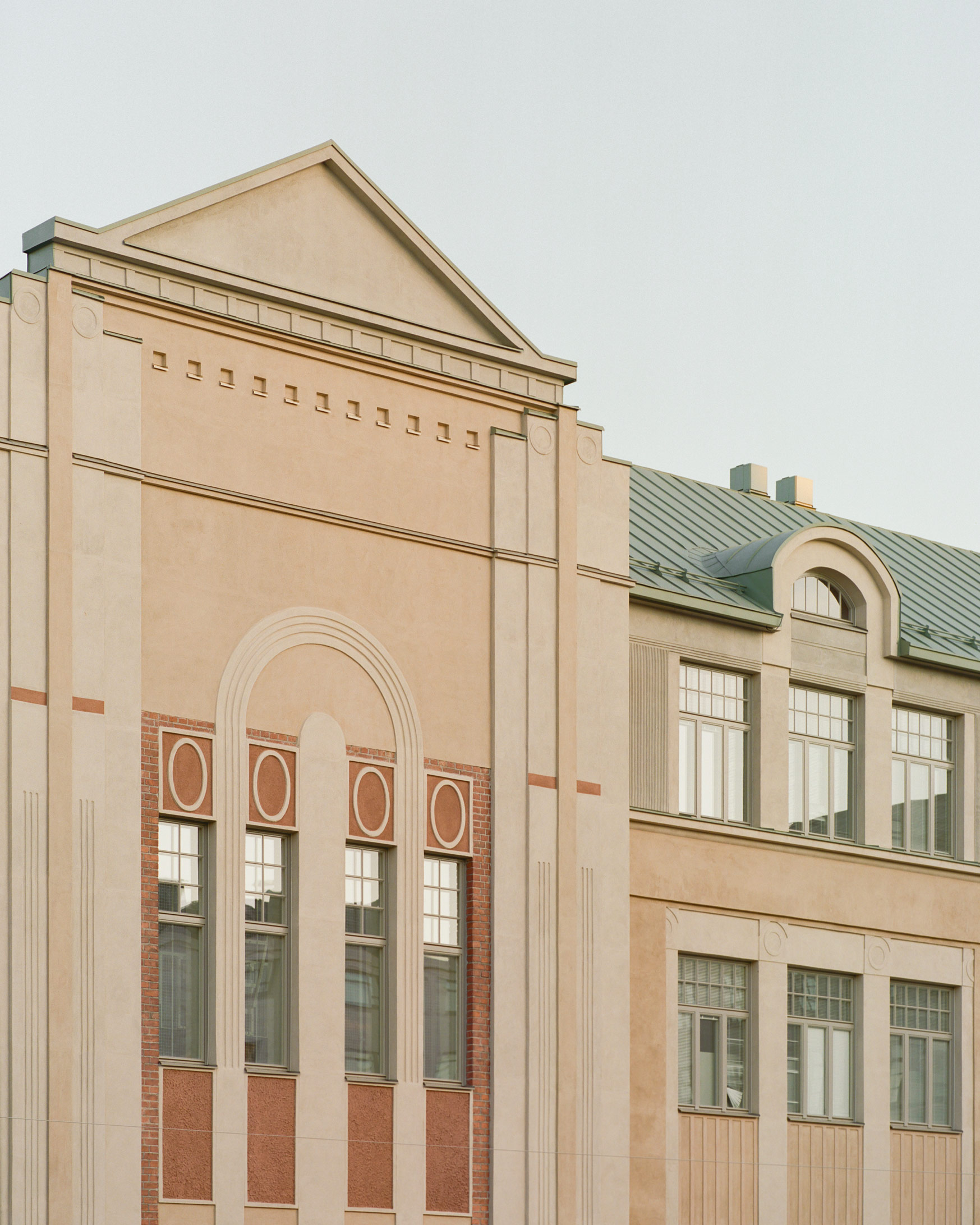

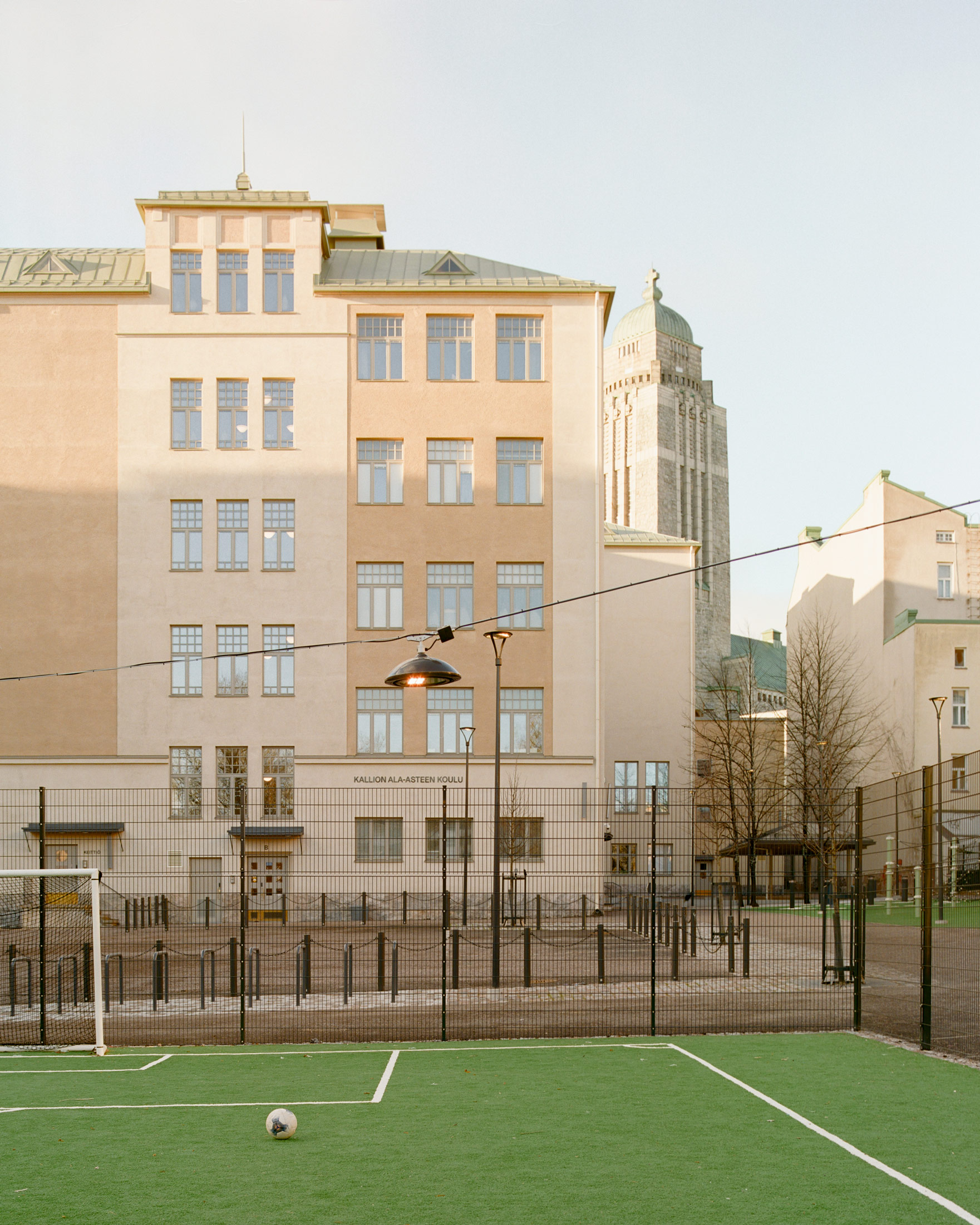

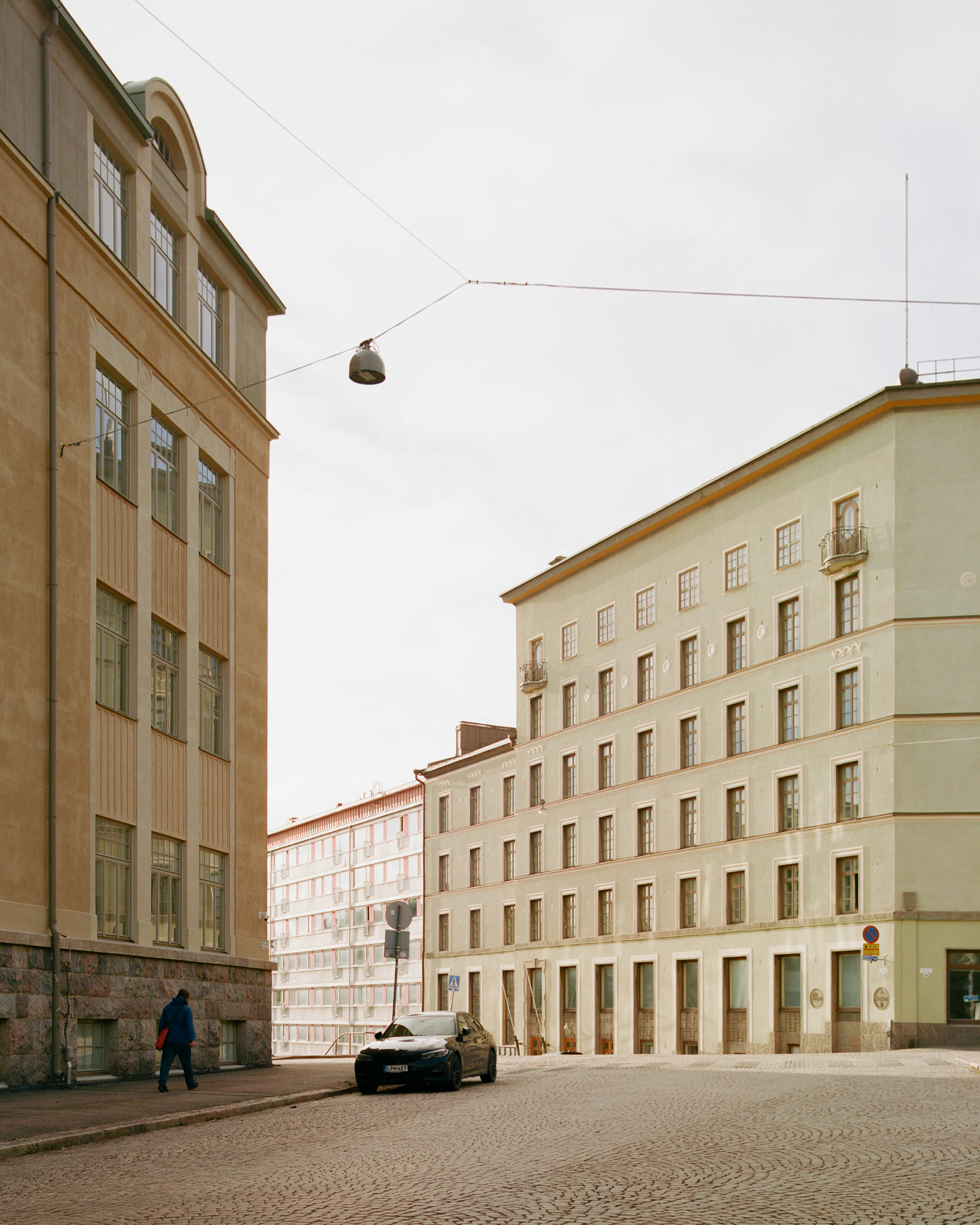
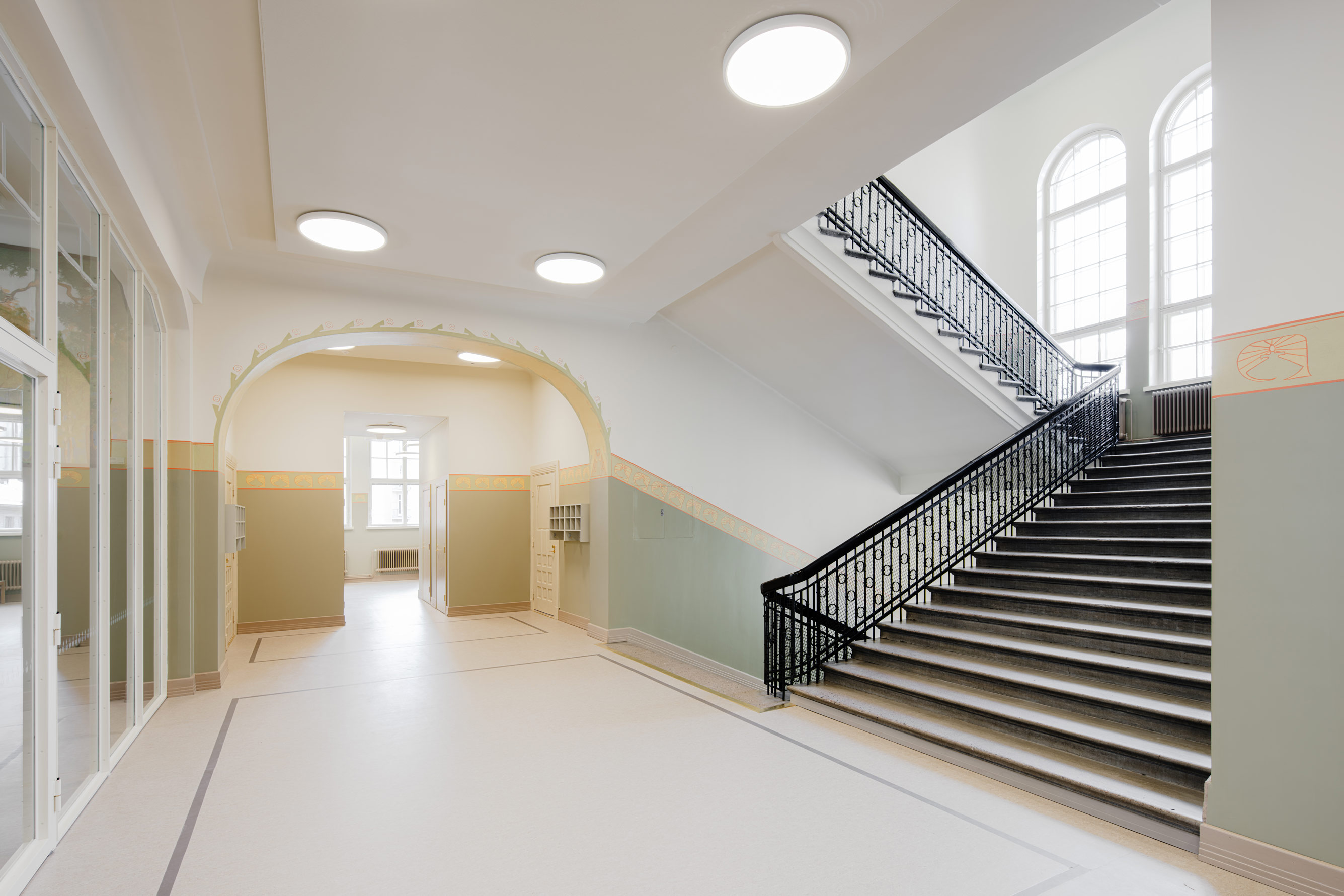
When planning began, the school was characterized by alterations made in the 1960s. During that era, most doors and windows had been replaced, original interior colors and decorative painting covered over, and the Art Nouveau façade ornamentation simplified. Since the scope of necessary repairs was already extensive, we had the opportunity to re-evaluate these earlier interventions. Beyond upgrading technical systems and functionality, the goal was to highlight the building’s original architectural layers and, where possible, restore details from the 1910s.


The restorative work required the architects to expertly interpret partially fragmented data. Color analysis was conducted, for example, but yielded limited results as the plaster layers had been fully replaced during previous repairs. Consequently, historical photographs became a crucial source of information, providing insight into the original façade ornamentation.
While black-and-white photographs could not reveal specific colors, they captured the atmosphere and the tonal variations of the surfaces. The color design was therefore guided by prior experience with buildings of the same era, with decisions made in close collaboration with the City Museum and conservation specialists.
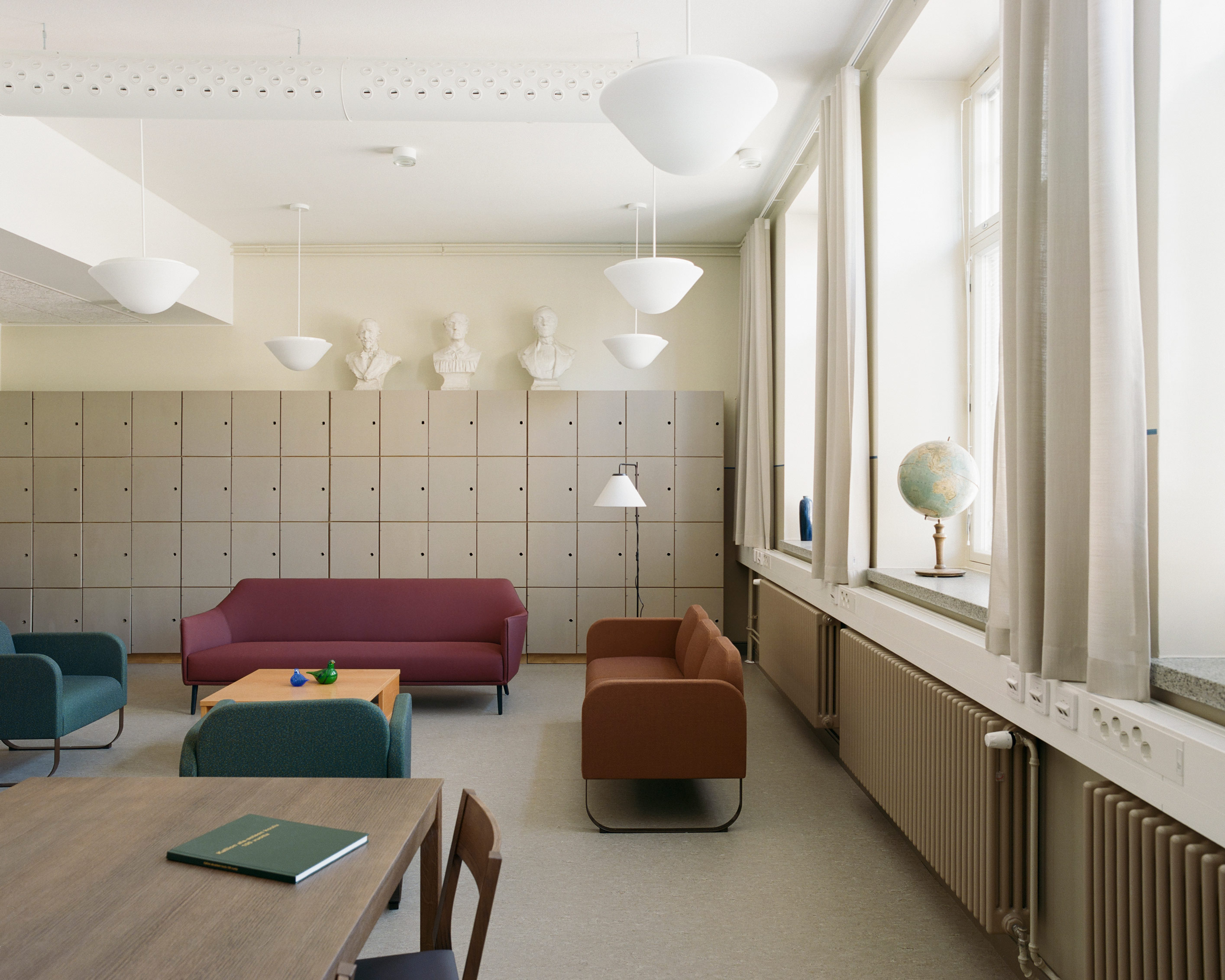

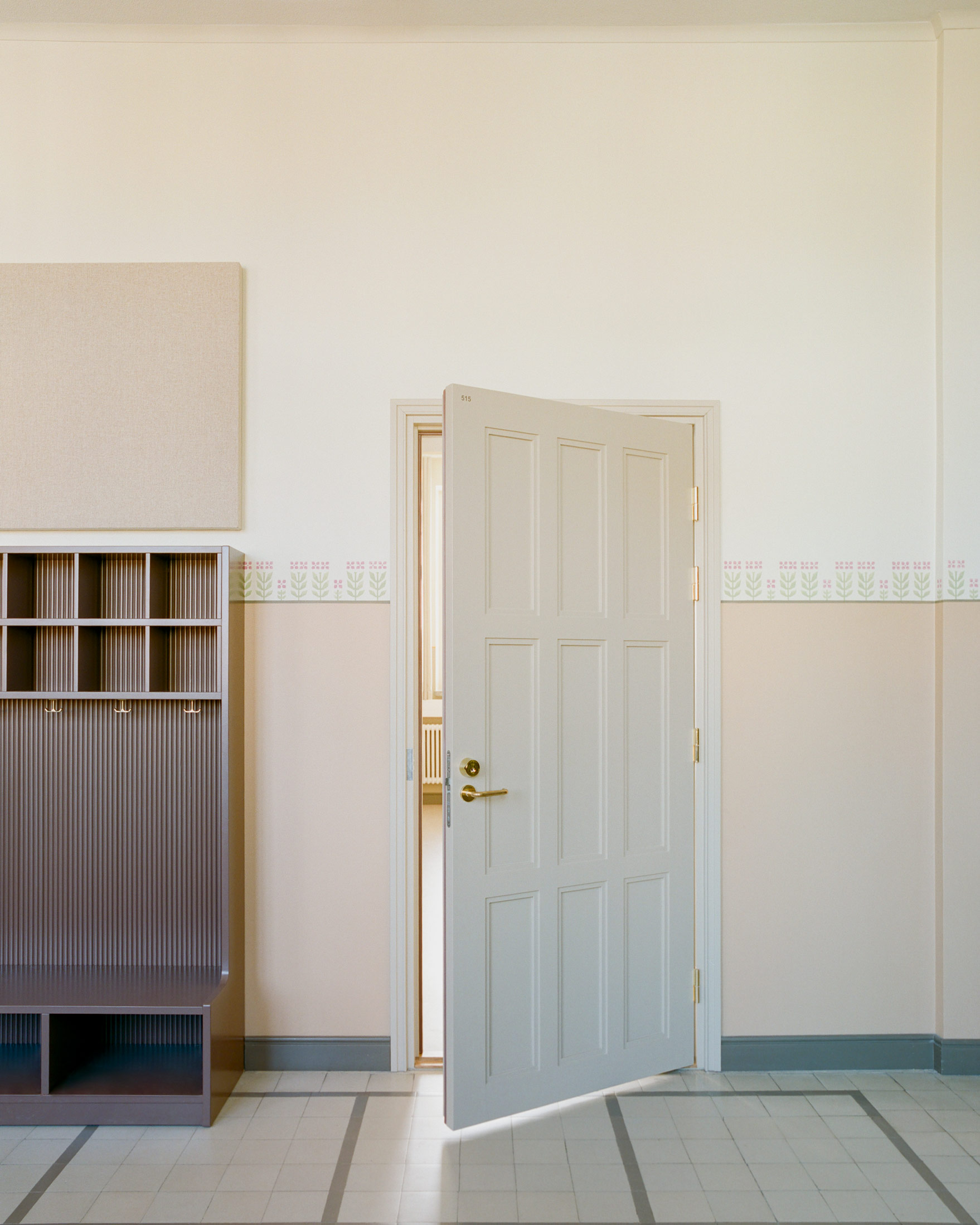

Extensive material samples and mock-ups helped align manufacturers with the project's quality goals. In collaboration with other designers and authorities, we developed solutions that suited the protected building while also addressing strict accessibility and fire safety demands.
This successful teamwork was recognized with a nomination for the City of Helsinki’s Rakentamisen ruusu (‘Rose of Construction’) award. The nomination specifically highlighted the project’s seamless collaboration and professional execution.

Other work
Tehtaankatu Primary School
Otaniemi campus